
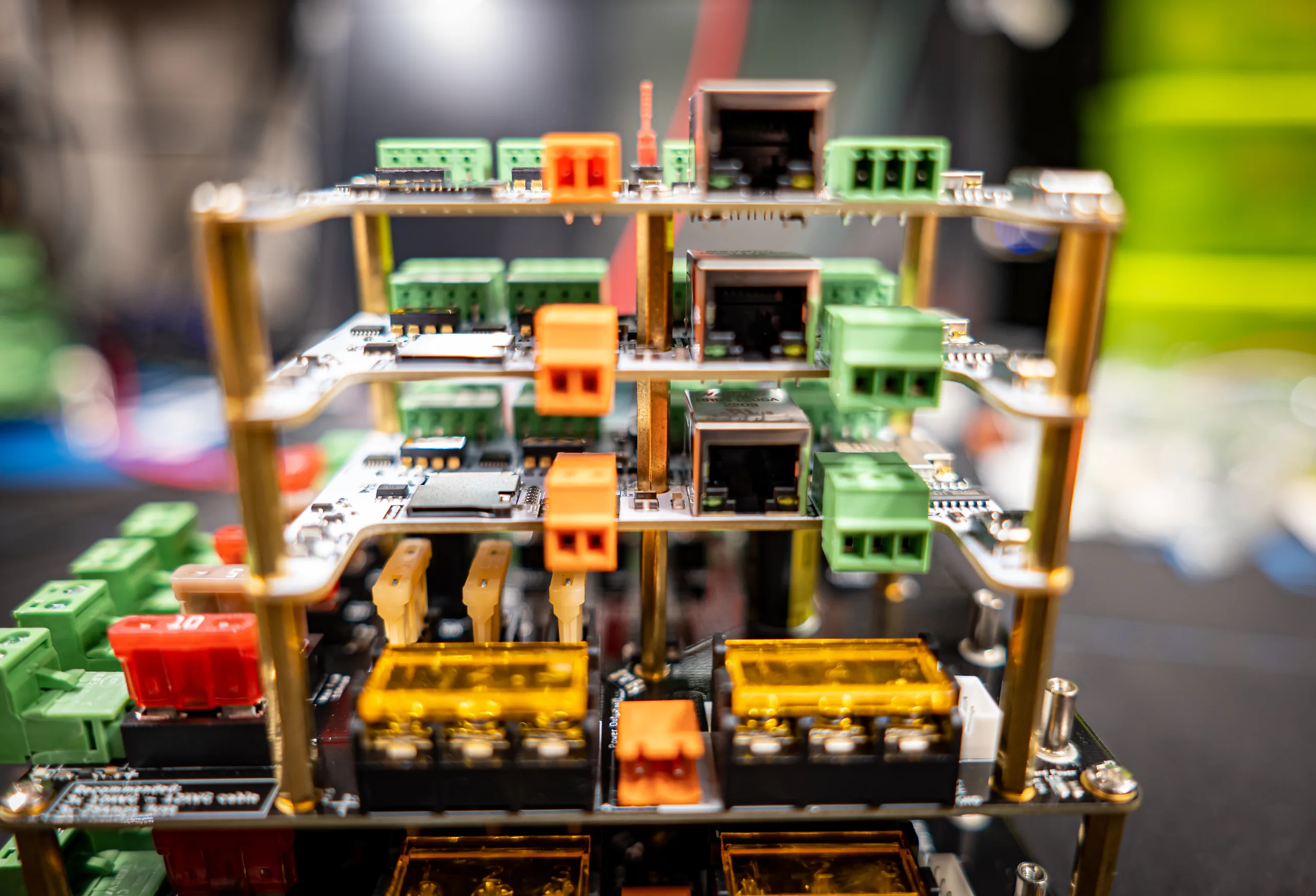
Eight channels
of brains.
The controller layer of the Dig-Octa stack: an ESP32 driving 8 level-shifted LED outputs in hardware, with wired Ethernet, a MicroSD slot and a relay port. It arrives with WLED already flashed. Around 2,000 LEDs per board, and stacks when you need more.
Shipping since 2024-10. v2 brings a 16 MB ESP32 module, a redesigned DC-DC stage, a socket for the optional temperature add-on and support for a plug-in INMP441 microphone. Earlier v1r1 boards (2022) stay fully supported; differences are noted in the version history.
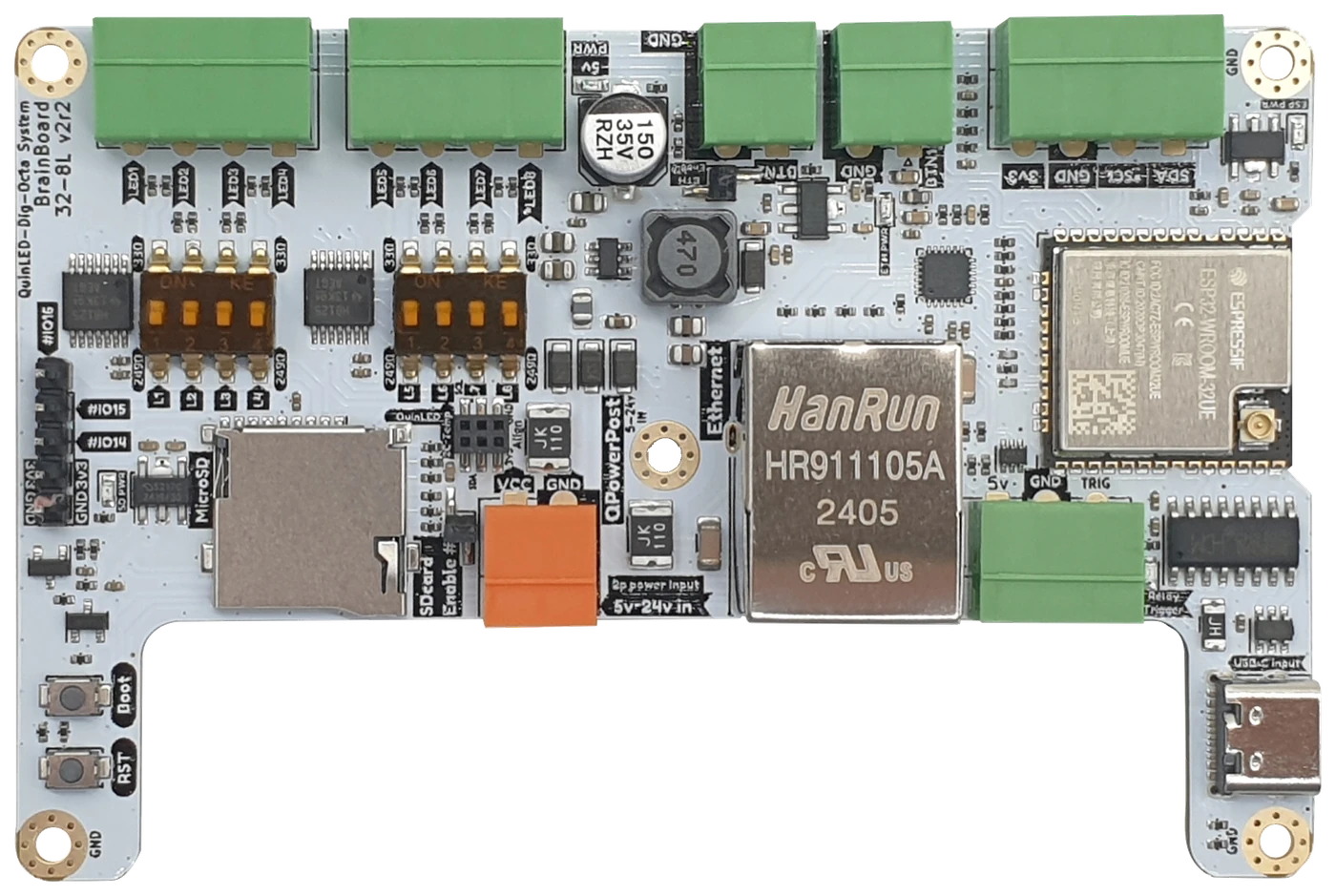
Small board. Serious switchboard.
Everything a big install asks of its controller lives on this white PCB: two 4-port level shifters push clean 5V data down all 8 channels, the LAN8720A keeps show data off your Wi-Fi, and three power inputs (USB-C, a 5–24V terminal and the QPowerPost feed from the powerboard below) can all be connected at once. The board sorts out which one to use, and switches between them without rebooting.
Built for the long show.
Fixed-function controllers run out of something first: channels, network, or protection. The 32-8L is designed so the thing you run out of is never the controller.
8 hardware-driven channels
All outputs run on the ESP32's RMT hardware and pass through real level shifters to 5V logic, 8mA drive per channel. Long runs get a per-channel DIP switch: 249 Ω default, 33 Ω for 3-wire prop cabling.
Ethernet, standard
10/100 wired networking via the LAN8720A chip. Real-time pixel streams from xLights or Madrix want a cable, not a hope. A physical jumper depowers the port if you'd rather save the energy.
Three power inputs at once
USB-C, a 5–24V pluggable terminal, and QPowerPost from the powerboard below. Connect any mix; the custom DC-DC accepts 3–24V and always serves a stable 5.12V to the logic.
MicroSD for show files
ESPixelstick v4's hybrid mode plays the sequence from the card while the network only carries sync from FPP. Big synchronized shows stop caring about Wi-Fi bandwidth.
Relay port kills standby waste
A dedicated 3-pin terminal triggers high or low relay boards (up to 4× 10A or 2× 30A). Let WLED switch the big PSU off at the AC side and idle the whole rig at phone-charger wattage over USB-C.
Sound-reactive, plug-in
v2 boards take an INMP441 digital microphone on a dedicated header. Flash an Audio Reactive build from install.quinled.info and the whole display moves to the music.
Every connector, labeled.
Quindor's annotated port map of the 32-8L. The board keeps every port reachable even when it sits in a stack, and the silkscreen labels match this diagram.
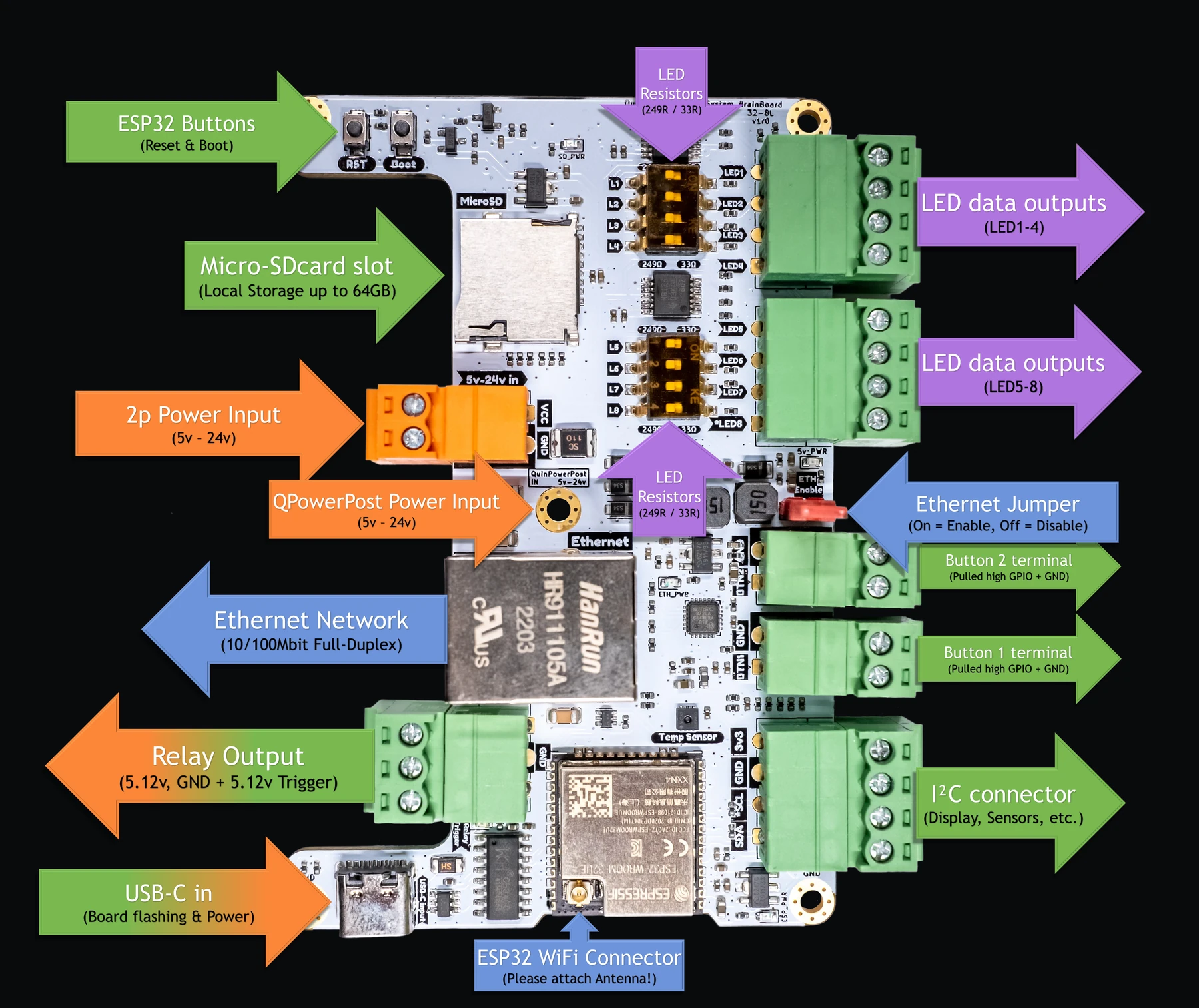
Heads-up: LED8 shares a pin
LED output 8 and the I²C SCL line use the same GPIO. Plan on one or the other: 8 LED channels, or 7 channels plus I²C accessories.
Buttons, debounced
Two input terminals are hardware-debounced and pulled high, ready for wall buttons or a rotary's push switch without extra parts.
Pinout, pre-configured
Flash from install.quinled.info and the GPIO map arrives set up. The full pinout table lives on quinled.info.
The numbers that matter.
| MCU | Espressif ESP32-WROOM-32UE, dual-core 240 MHz, 520 KB SRAM, 16 MB flash (since v2) |
| LED outputs | 8 channels, RMT hardware-driven, level-shifted to 5.12V (8mA per channel), on 2× 4-pin 3.81 mm pluggable terminals |
| Data resistors | Per-channel DIP switch: 249 Ω default, 33 Ω for long 3-wire runs |
| Capacity | ~2,000 LEDs (WLED) / ~3,000 (ESPixelstick v4) above 40 FPS; 500–600 ws281x per channel advised |
| Network | 10/100 Ethernet (LAN8720A, RJ45) + 2.4 GHz Wi-Fi with external antenna (included) |
| Storage | MicroSD slot (SPI); v2 adds a power jumper that frees 3 GPIOs when unused |
| Power inputs | 3 simultaneous: USB-C 5V (CH340 serial + auto-reset), 2-pin 5–24V terminal, QPowerPost 5–24V |
| DC-DC | Custom circuit, 3–24V in → 5.12V out (logic, relay, data); max advised draw 750mA; 3× 800mA 3.3V LDOs (ESP32 / LAN / SD) |
| Relay output | 3-pin terminal: 5.12V, GND, trigger; high- or low-trigger boards; up to 4× 10A or 2× 30A relays |
| Inputs | 2× debounced button terminals; I²C on a 4-pin connector (SCL shared with LED8); 5-pin mic header (v2, INMP441) |
| Mounting | 5× M2.5 holes: 4 outer GND + 1 center VCC-in (QPowerPost); board height 20 mm; no components on the back |
| Firmware | WLED pre-flashed (fully supported, own Ethernet profile), ESPixelstick v4, MoonLight, or your own code |
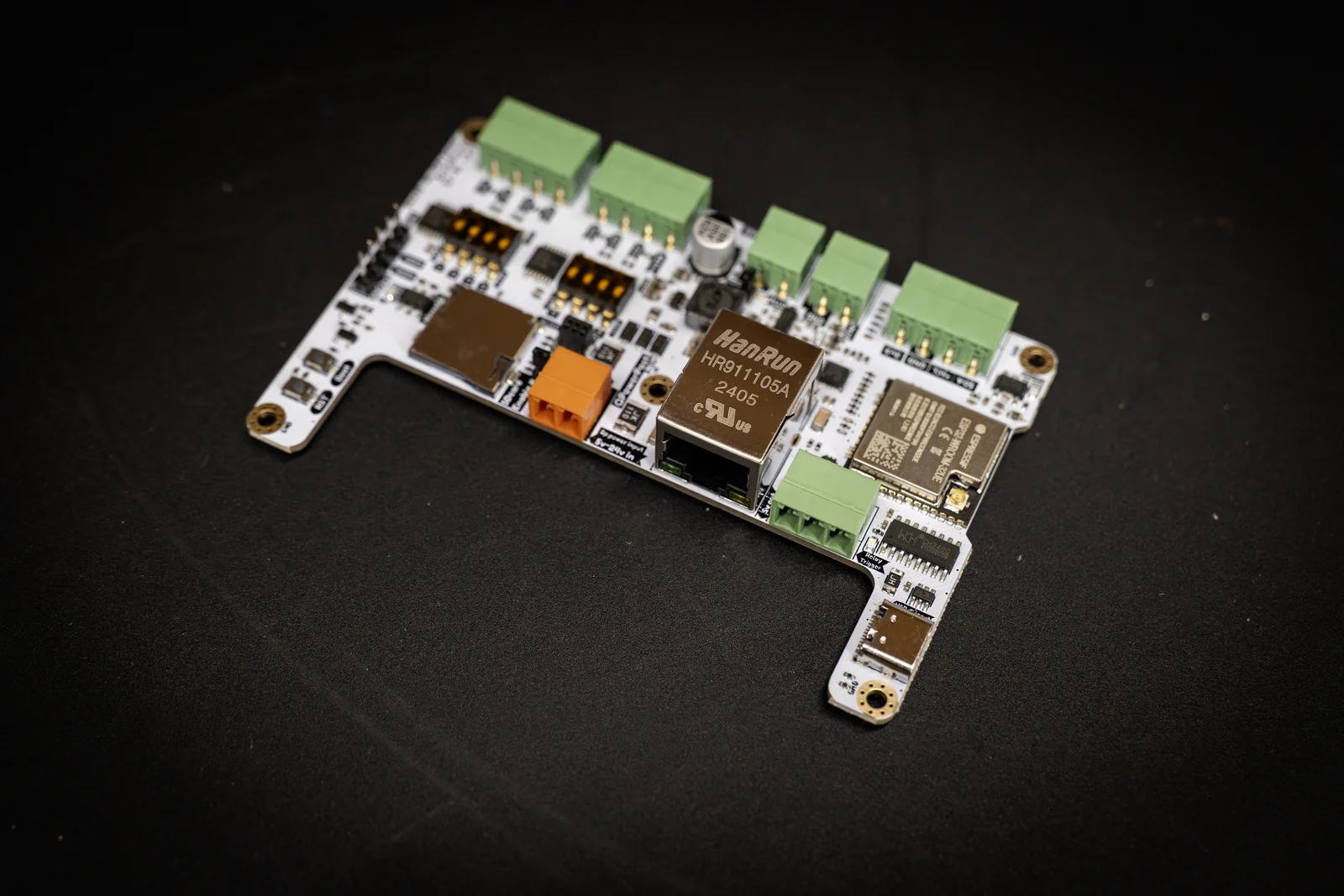
Revisions, documented like firmware.
| Version | Released | What changed |
|---|---|---|
| v2 (v2r2) | 2024-10 | 16 MB flash module, full track redesign, new dual-coil DC-DC, temperature sensor moved to an add-on socket, SD power jumper + GPIO header, INMP441 microphone support. Terminals unchanged. |
| v1r2 | 2024-06 | Intermediate revision that escaped early in one batch; some had faulty onboard temperature sensors. Superseded by v2. |
| v1r1 | 2022-11 | Original release with onboard SHT30 temperature and humidity sensor. |
Full changelog on quinled.info. This page tracks the shipping version; older boards keep working and keep their docs.
Pick its power.
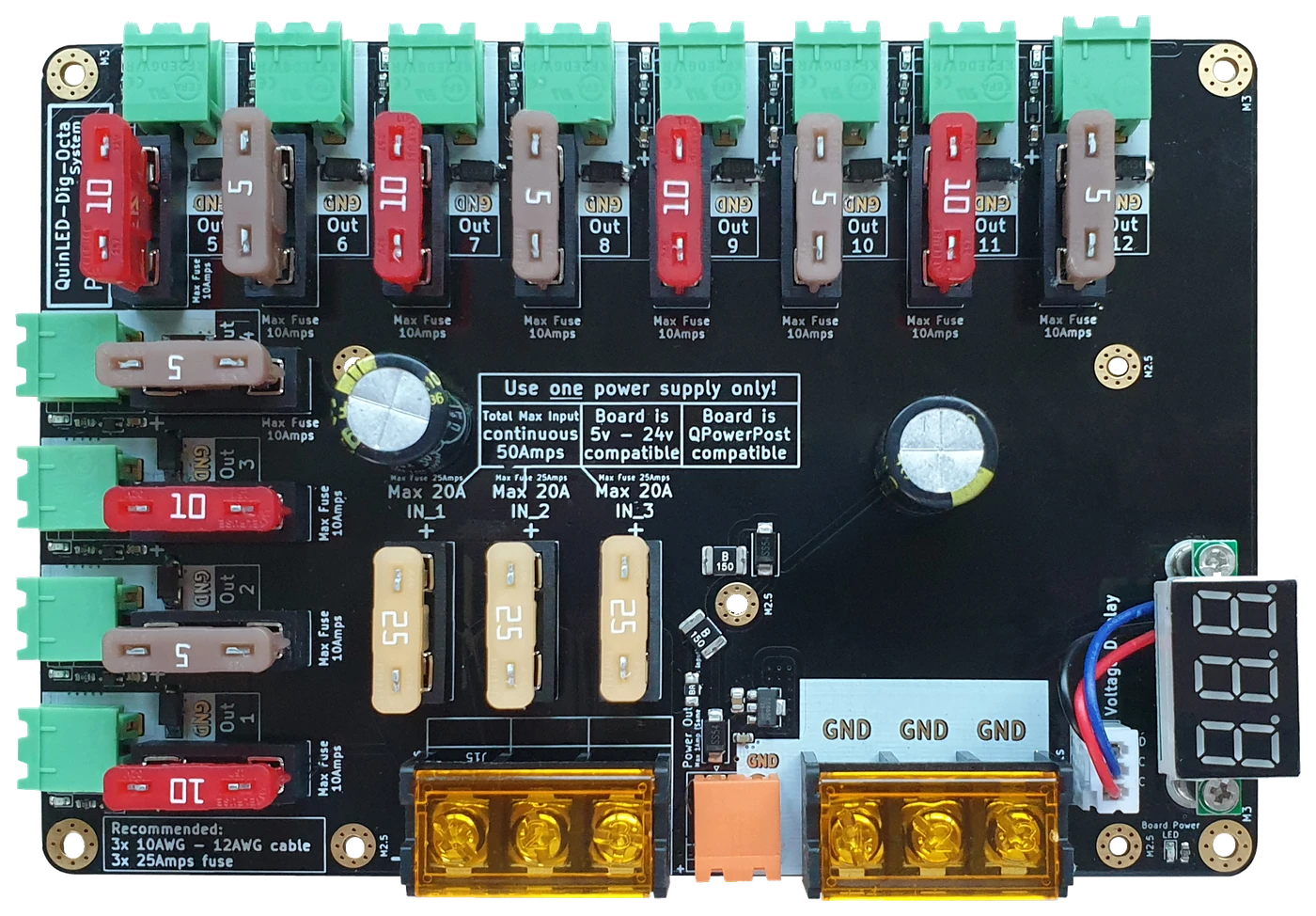
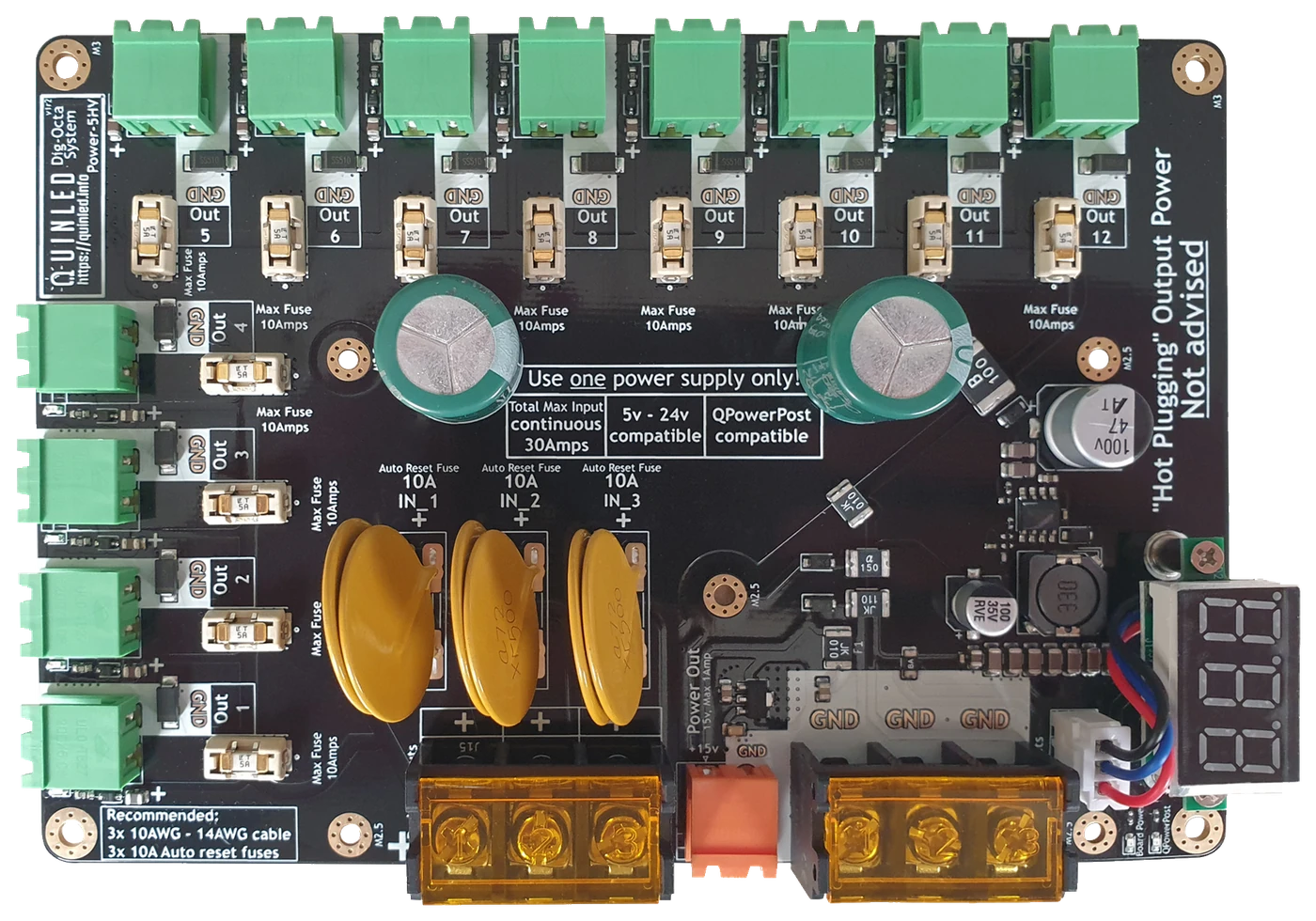
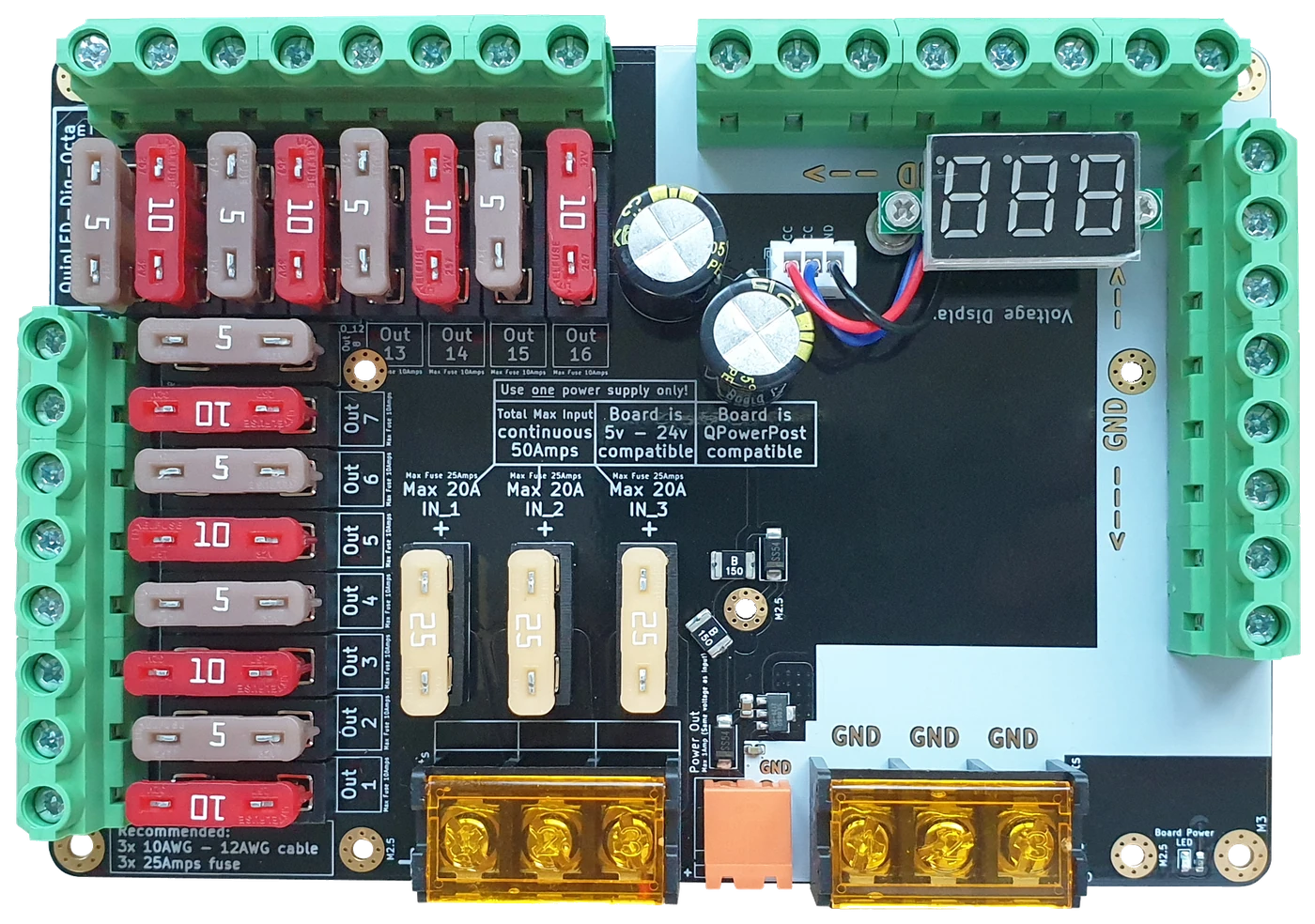
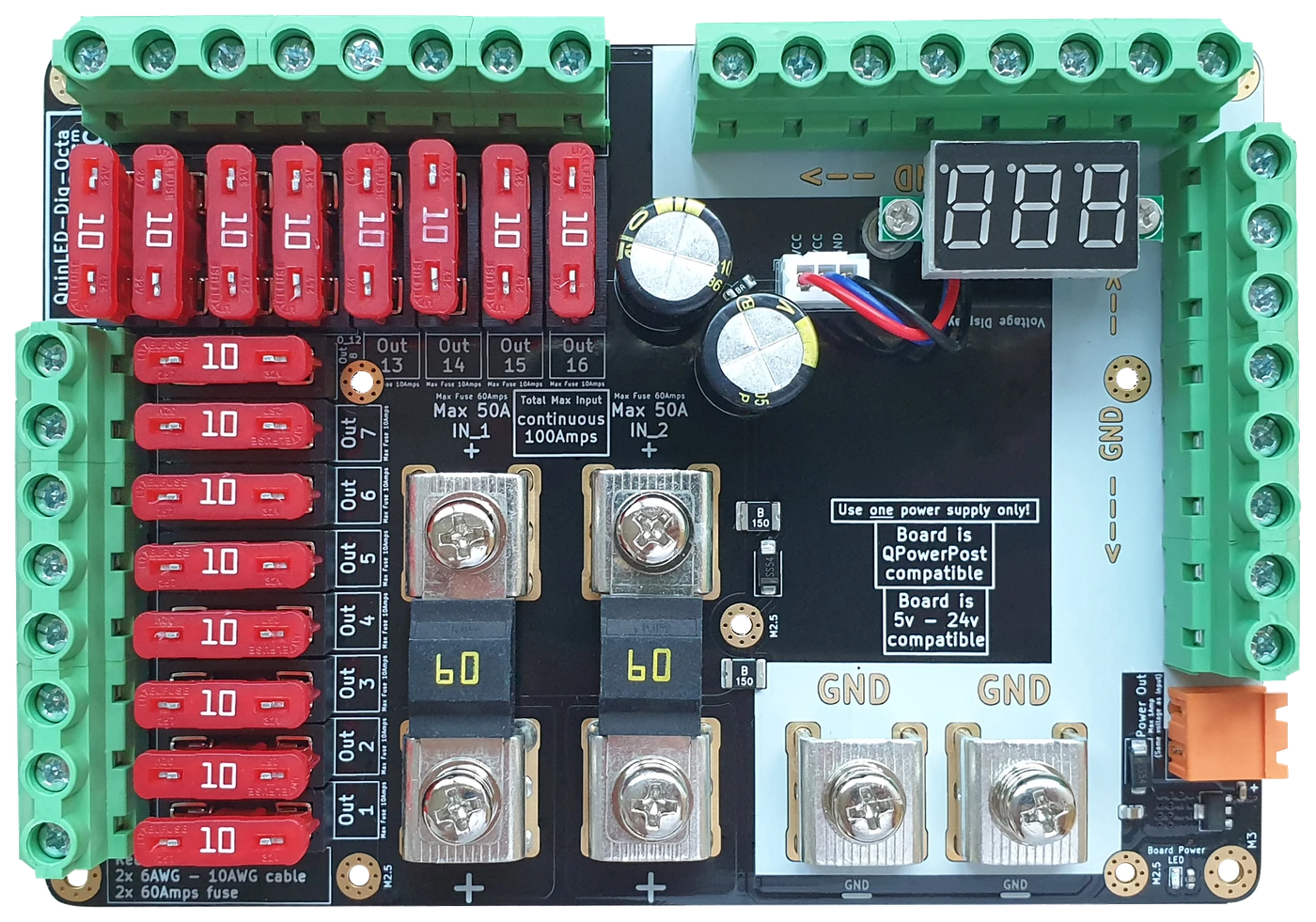
A brainboard wants a fused powerboard under it. Choose by current, connector style and voltage; every one of them feeds the brainboard automatically through QPowerPost.
Start with the brains.
One checkout hub: every order starts at quinled.shop, which hands you to the reseller for your region.
Warranty is 6 to 12 months on every board. If something acts up, come to the Discord: we troubleshoot it together, and faulty hardware gets replaced. Hardware by Quindor.
Ships with WLED installed, Ethernet enabled and 30 test LEDs configured per output. Wire it, power it, open a browser.