
The controller
that stacks.
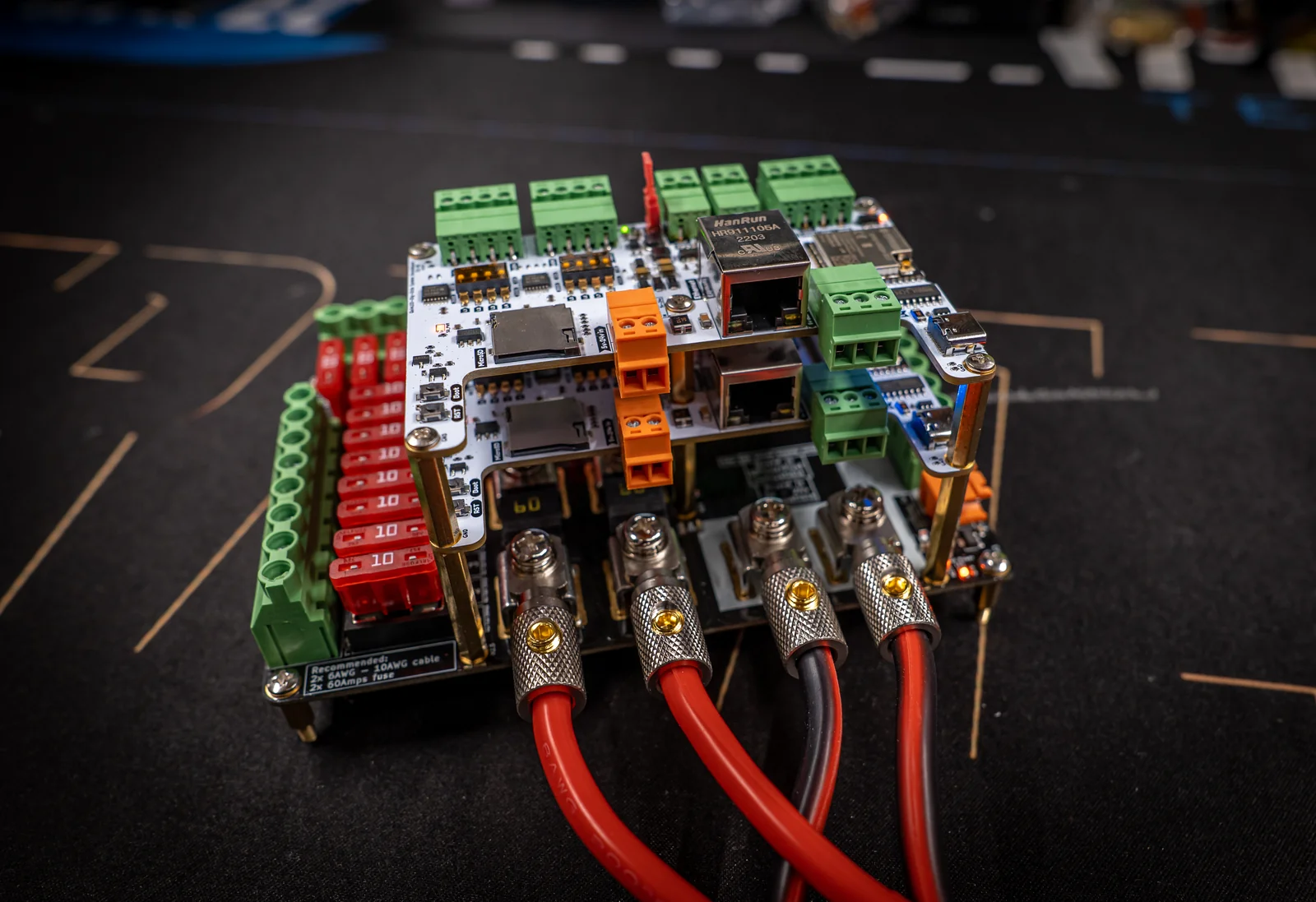
Dig-Octa splits the LED controller in two. A Brainboard drives 8 addressable channels over Ethernet or Wi-Fi. A fused powerboard underneath feeds it with 30 to 100A, from 5V to 48V. Building a megatree, a whole-house outline, or anything where four channels and one power supply stopped being enough? This is the system for that, and it ships with WLED already flashed.
Power below. Brains on top.
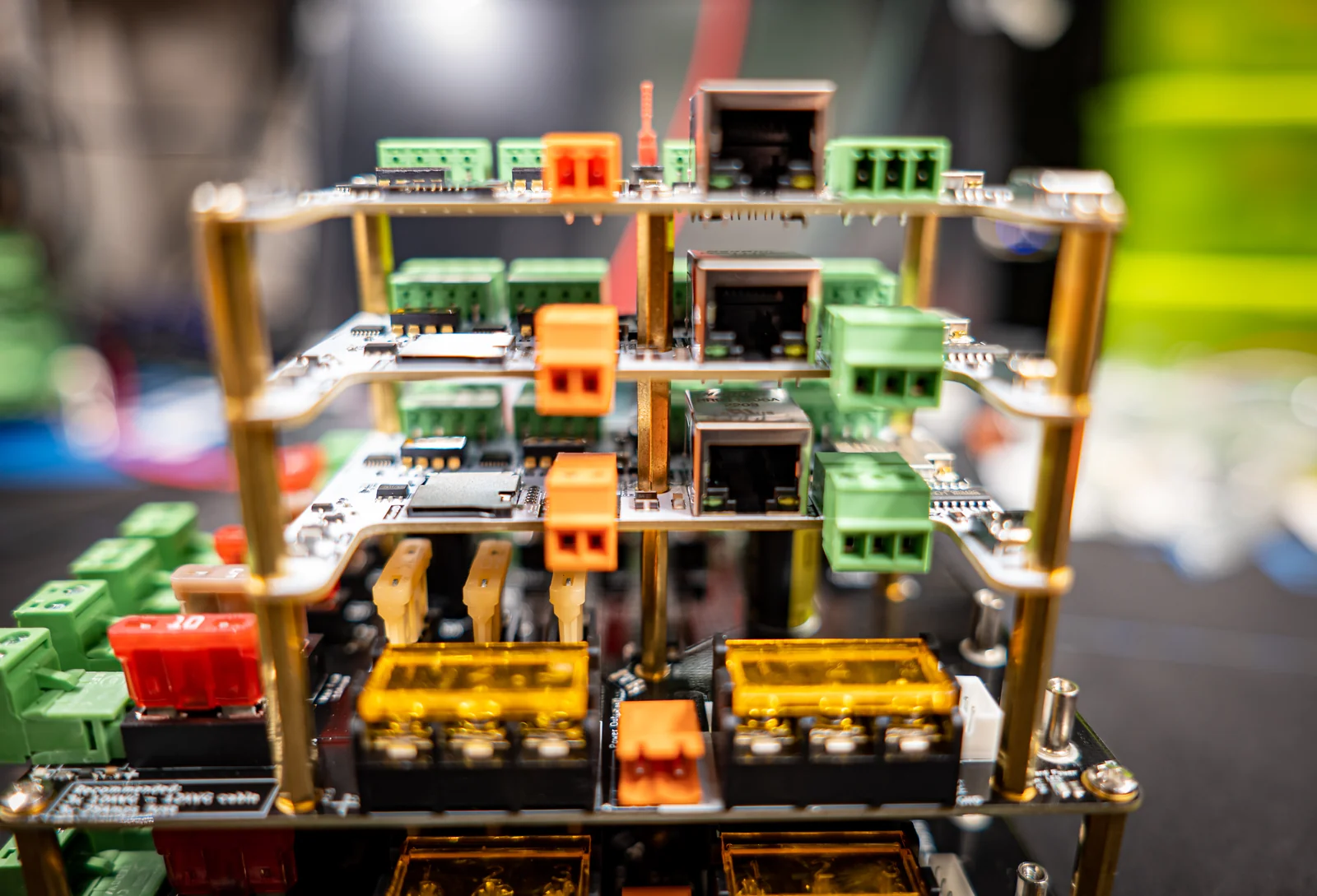
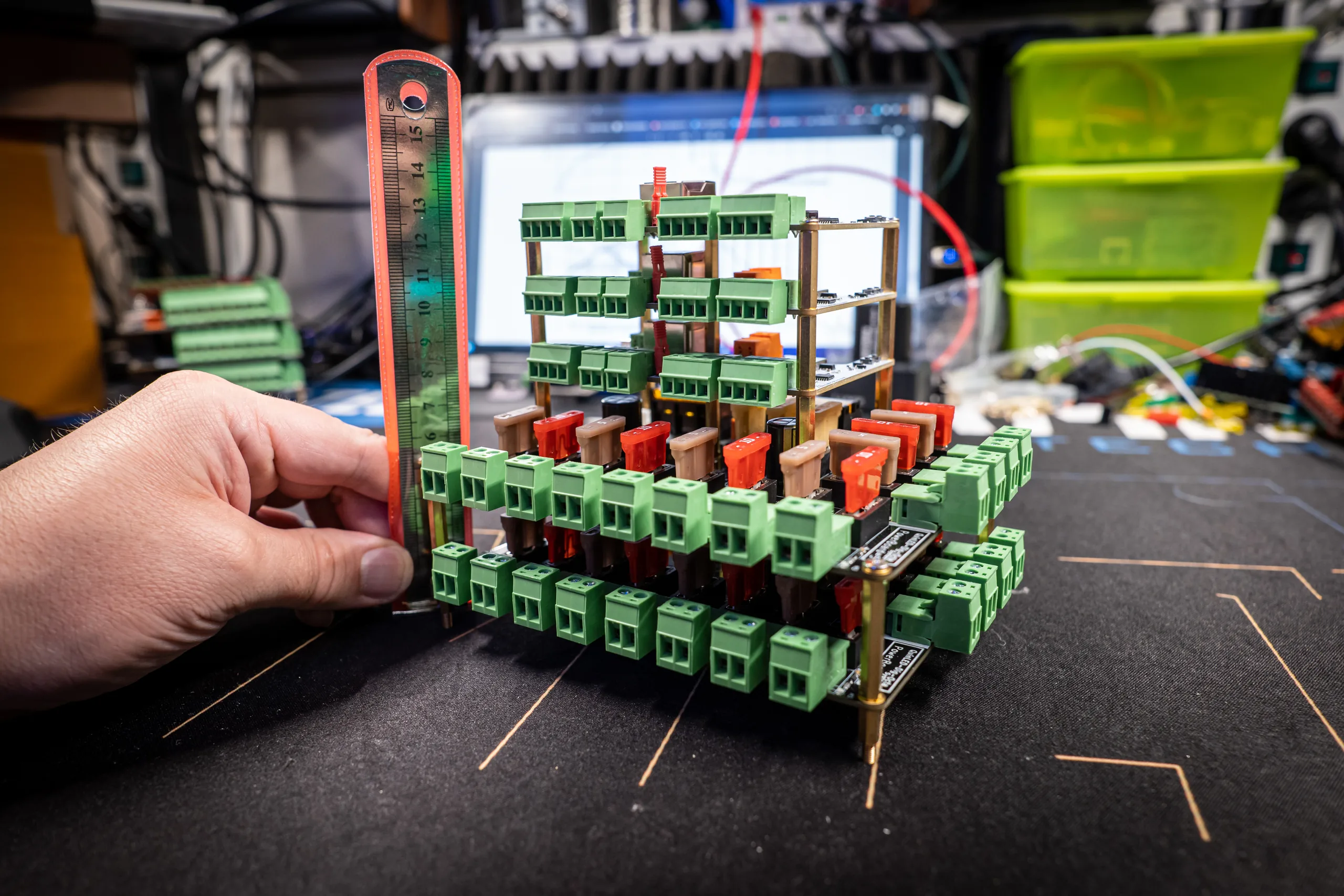
Fixed controllers make you buy the same compromise every time. The Dig-Octa is a kit of parts instead: powerboards handle the amps, brainboards handle the pixels, and brass QPowerPost standoffs carry power up through the stack. No wires between boards. Need more channels? Add a brainboard. Need more fused outputs, or a second voltage? Add a powerboard.
- Room to grow future top boards The top of the stack stays open on purpose. More brainboard versions are planned, mixed stacks are encouraged, and a 24V stack feeds up to 12 brainboards through QPowerPost alone.
- Brainboard controller layer ESP32 with 8 level-shifted LED outputs, 10/100 Ethernet, MicroSD and a relay port. Each brainboard is its own WLED controller. Stack several and they share power, not data.
- Powerboard base layer One power supply in, 12 or 16 individually fused outputs back out. Pick 50A, 100A, or the 24–48V high-voltage version. A red display shows live voltage at the board.
Power over standoffs
The brass QPowerPost standoffs are the power bus. Powerboards can only send, brainboards can only receive, and both sides carry PTC auto-reset fuses. The direction is enforced in hardware.
Mix voltages in one stack
Run a 5V powerboard on top of a 12V one. Brainboards pick the highest voltage available and switch over without going offline if a supply drops out.
Grows board by board
Start with one brainboard on one powerboard. Add an extra brainboard for 8 more channels, or a second powerboard for more fused feeds. Every port stays reachable in the stack.
Five boards. Any combination.
One brainboard runs the pixels. Four powerboards cover everything from a tidy 50A stack to a 100A monster, including a 24–48V version for modern high-voltage LEDs.
Brainboards
the controller layer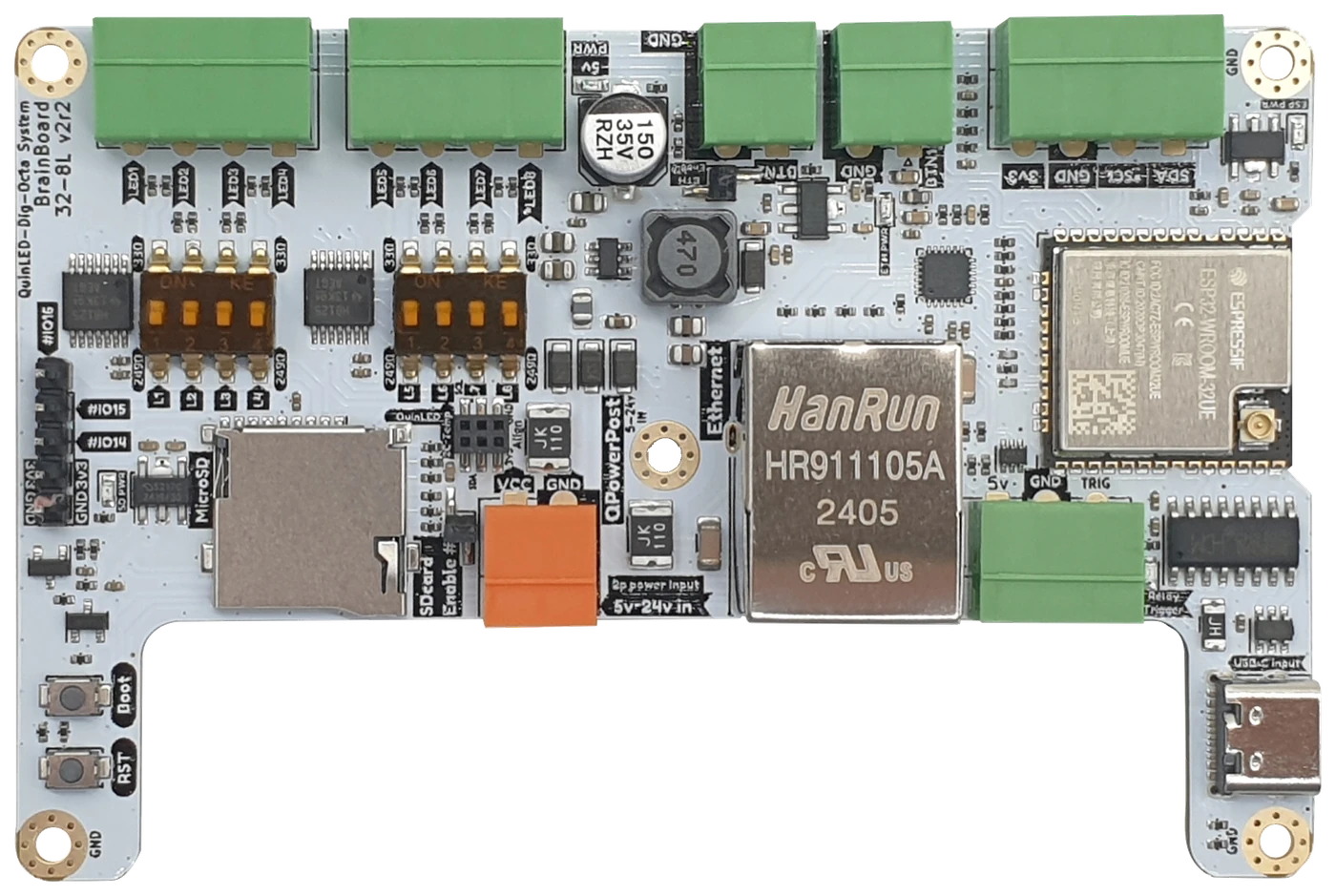
Powerboards
the power layer · one PSU per board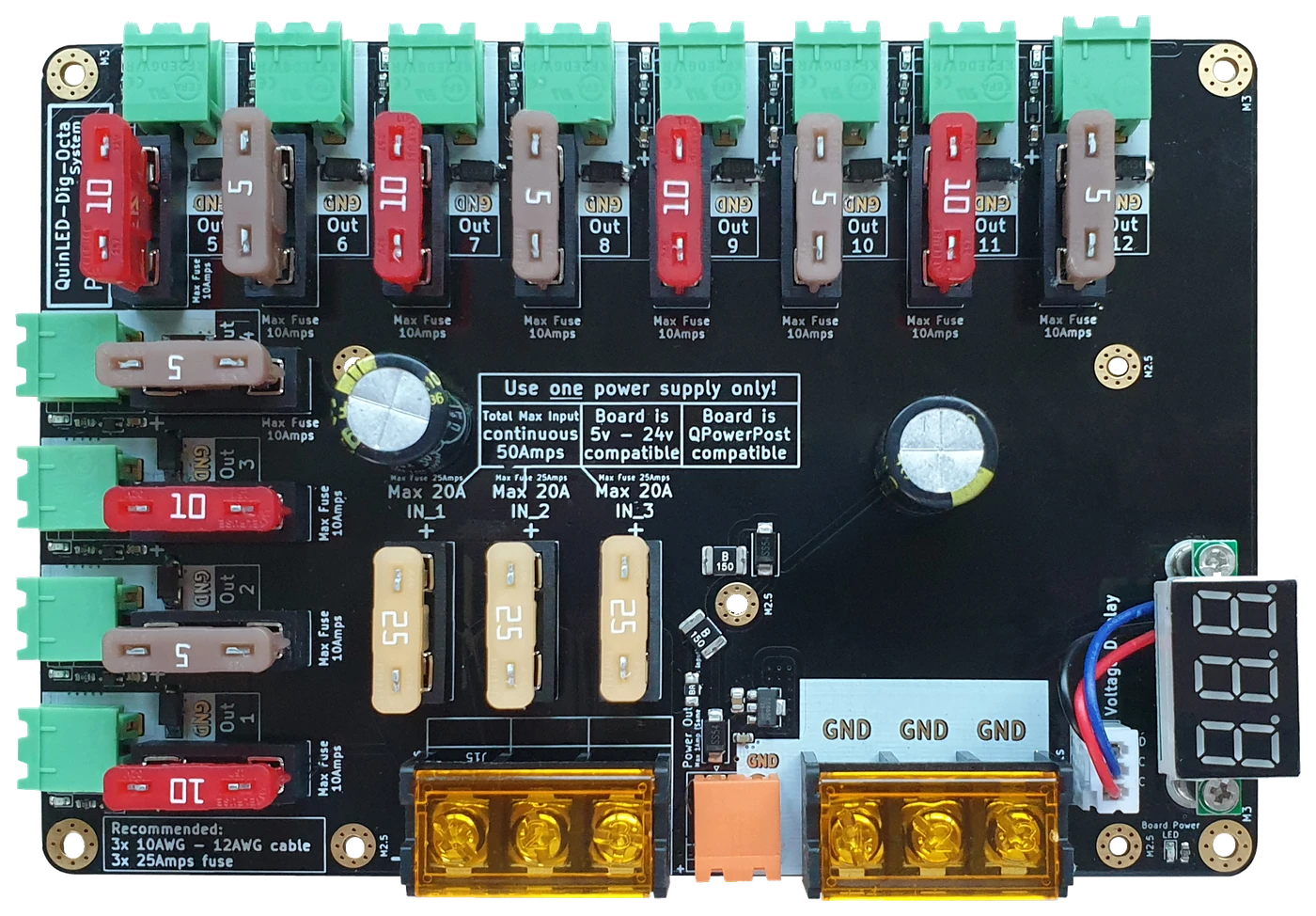
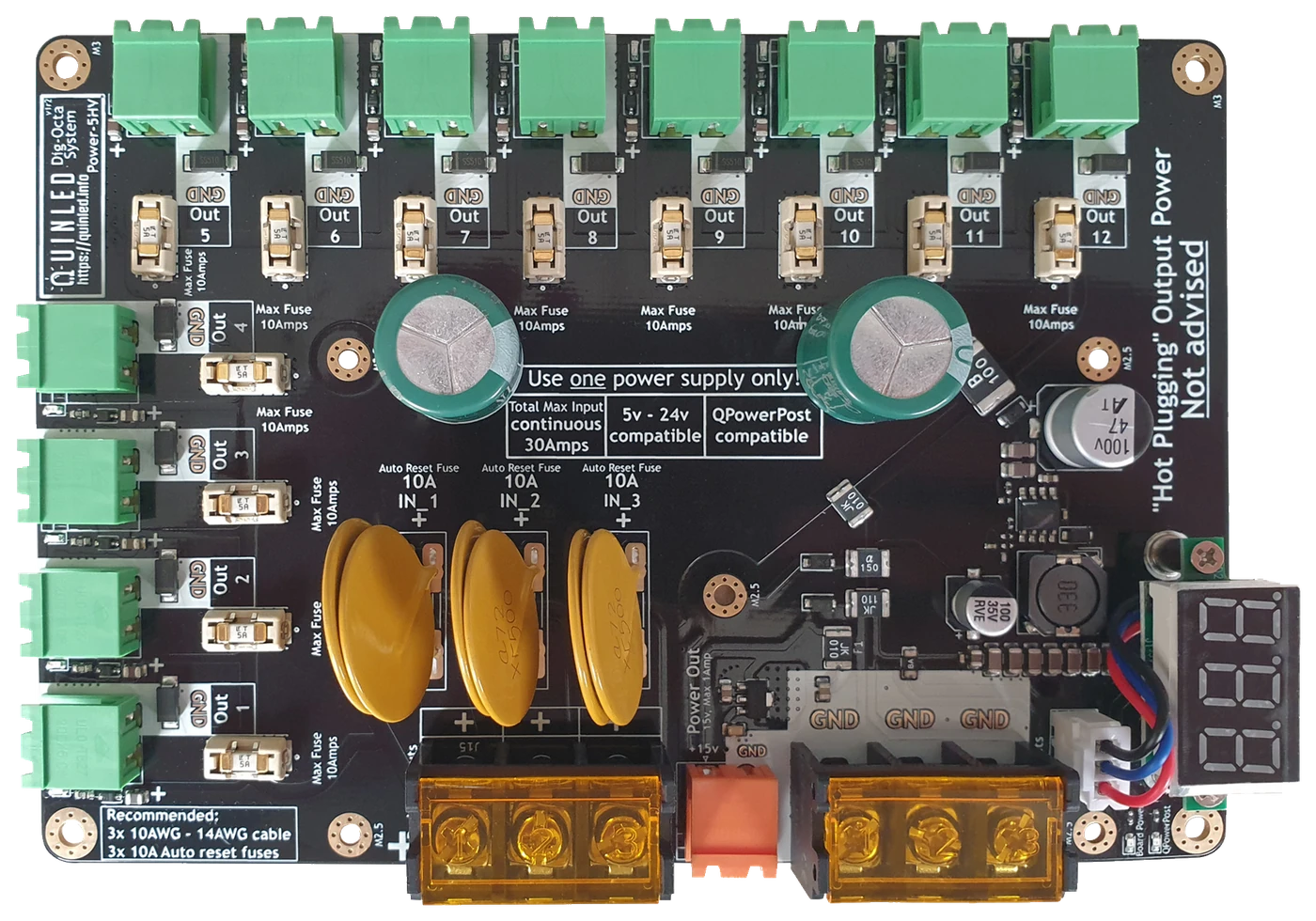
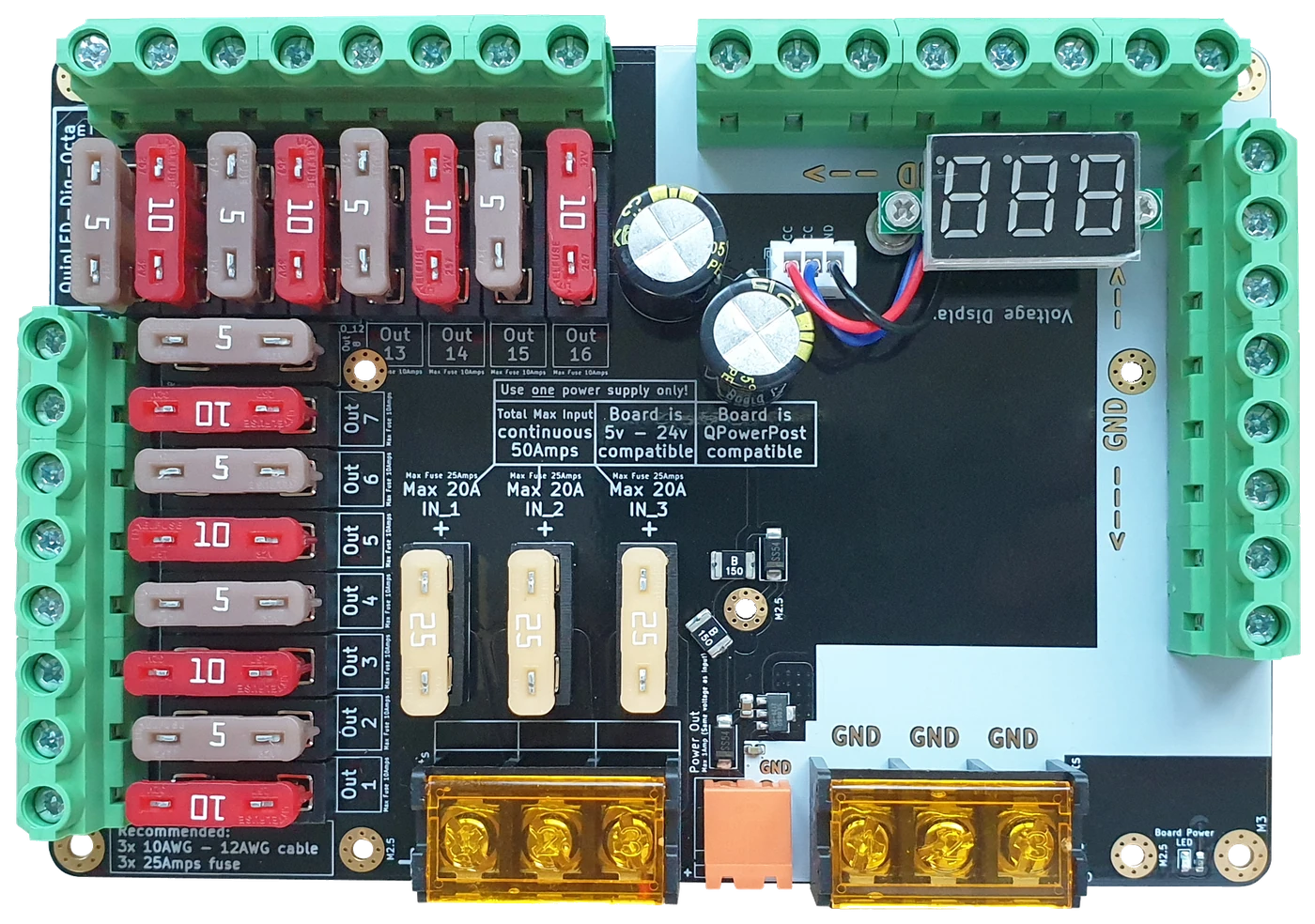
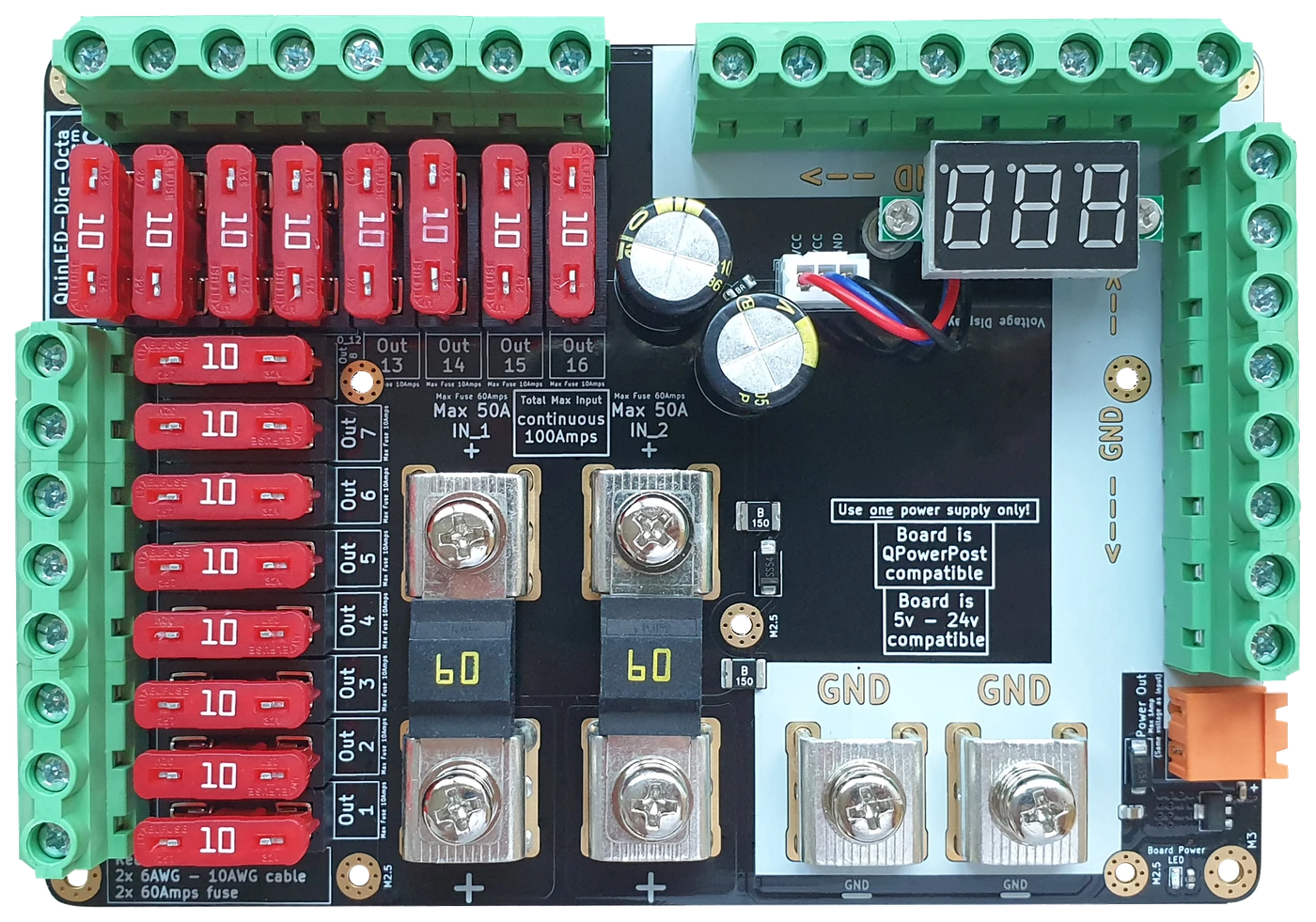
| Pick by | Power-5 | Power-5HV | Power-7 | Power-7HC |
|---|---|---|---|---|
| Continuous power | 50A | 30A | 50A | 100A |
| Voltage | 5–24V | 24–48V | 5–24V | 5–24V |
| Outputs | 12× pluggable | 12× pluggable | 16× screw | 16× screw |
| Output fuses | ATO blade, max 10A | SMD 1808, max 10A | ATO blade, max 10A | ATO blade, max 10A |
| Input | 3× barrier, fused | 3× barrier, PTC | 3× barrier, fused | 2× M5 bolts, 60A MIDI |
| Max watts | 1,200W @ 24V | 1,440W @ 48V | 1,200W @ 24V | 2,400W @ 24V |
| Best for | Tidy stacks, fuses reachable mid-stack | Govee-style 36V and 48V pixels | Many props, thicker cable | Big 5V installs, megatrees |
A fuse on every port. Every single one.
Big LED power deserves respect: a single 300-LED strip at 5V can pull 13A. On a Dig-Octa, every input and every output runs through its own socketed fuse, so you can match each fuse to the wire it protects. If something shorts, a cheap fuse opens before any wire can overheat. The rest of the install keeps running.
One output fails. Fifteen don't care.
Each output has its own fuse socket and its own red blown-fuse LED. Blow one and watch the light point straight at it. Here are four of up to sixteen.
- Real continuous ratings. 50A means 50A all night: the boards are designed for roughly a 25 °C rise above ambient at full load, tested, not estimated.
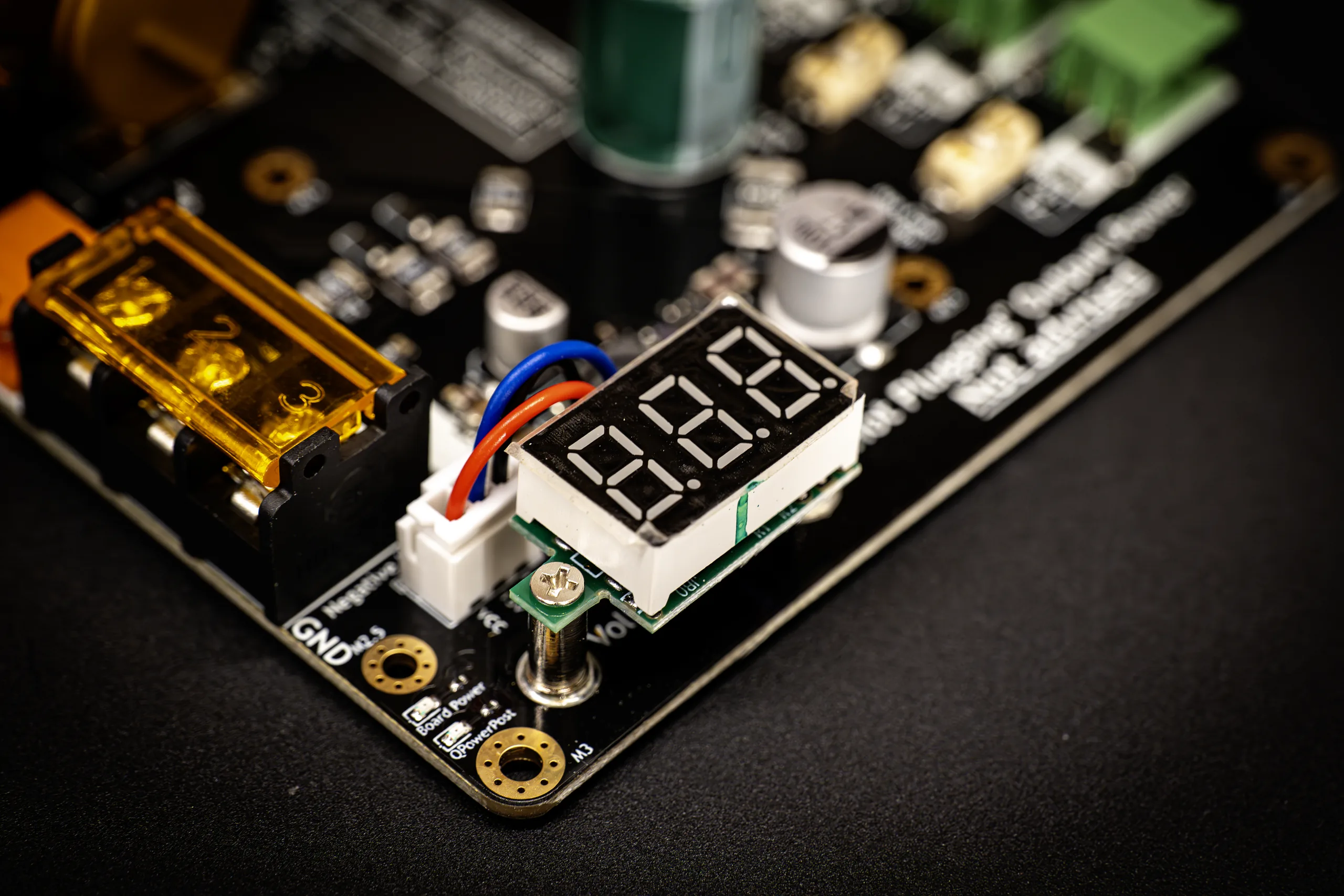
- A voltage display on every powerboard. The red 7-segment readout shows the live voltage at the board, including drop under load. In a mixed stack you see at a glance which board runs what.
- Blown-fuse lights find faults fast. Each output has an independent indicator on a constant-brightness circuit. A dark run on a cold December night takes seconds to diagnose, not an evening.
One hard rule from the engineering side: one power supply per powerboard, always. Multiple powerboards may share one big PSU, but never wire two PSUs into one board.
Plan in thousands, not meters.
One Brainboard-32-8L comfortably runs about 2,000 LEDs in WLED at full frame rate, or around 3,000 on ESPixelstick v4. Keep each channel near 500 to 600 pixels and the show stays above 40 FPS. After that it's a power problem, and that's what powerboards are for.
Demonstration only · plan real installs with the power injection guide
The max figure is full RGB white at 60mA per pixel; the injection plan uses your selected effects load and the house rules: start with a front feed (about 4A), add the end feed (another 4A), then middle injections at about 8A each in between. Size the supply with Quindor's measured power sheets, plan the feeds with the ultimate power injection guide, then fuse each run for its wire.
- Ethernet is the backbone. Real-time pixel data from xLights or Madrix swamps Wi-Fi fast. Every brainboard has wired 10/100 Ethernet onboard, the thing its smaller siblings skip.
- Per-channel data tuning. A DIP switch per output flips the data resistor from 249 Ω to 33 Ω for long 3-wire runs to xConnect props. A 10m / 32ft data run is easy, no extra hardware.
- Injection without the rat's nest. 12 or 16 fused outputs per powerboard mean every power-injection run lands on its own labeled, fused terminal instead of a tangle of splices and wire nuts.
WLED out of the box. Show software when you're ready.
Every brainboard ships pre-flashed with WLED, Ethernet enabled, outputs configured, fully supported with its own "QuinLED-Dig-Octa" profile. Point your browser at it and play. MoonLight has built-in support too, and when the project becomes a show, the same hardware speaks the protocols the big tools use.
The hardware, up close.
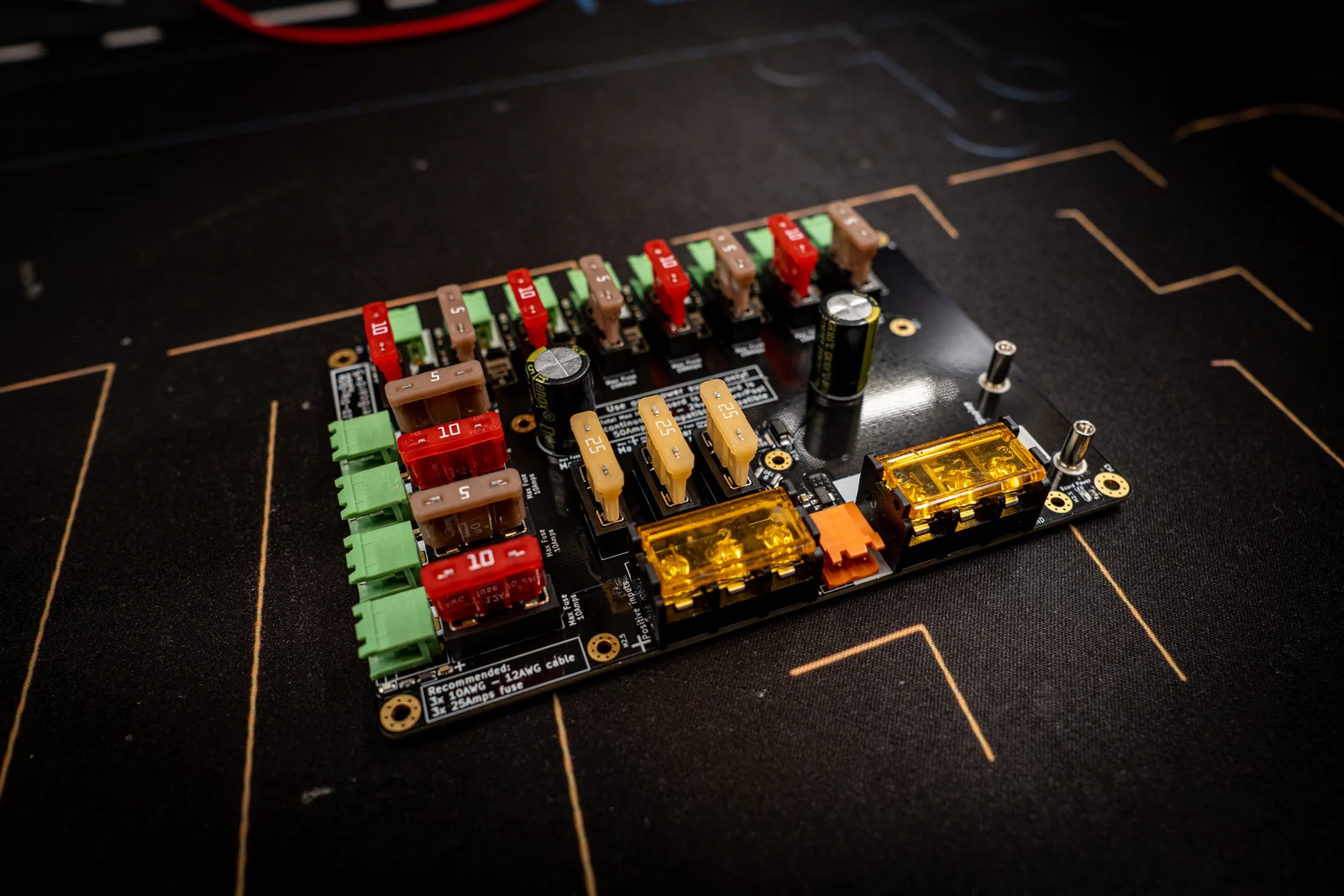
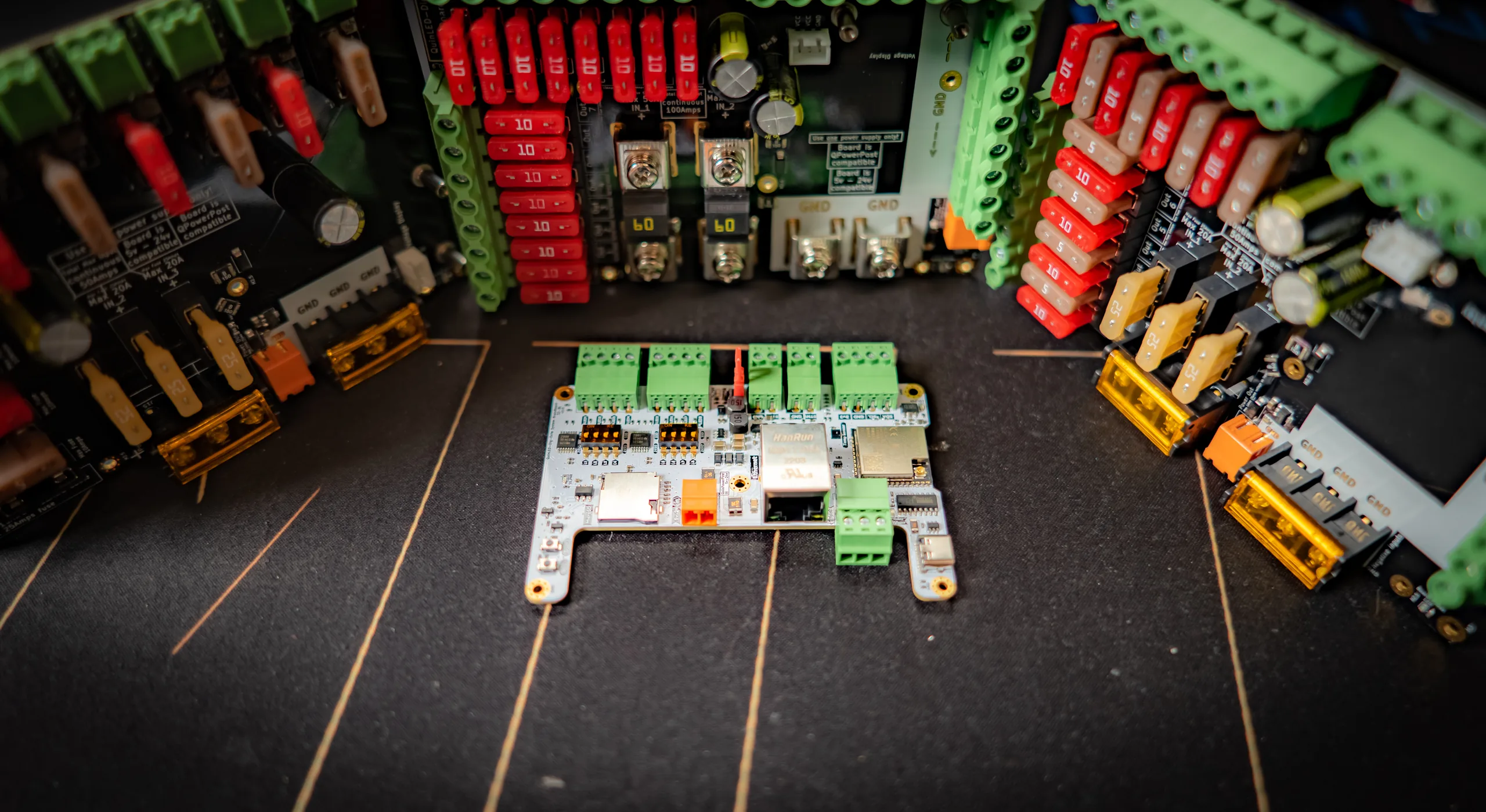
No renders here. These are the actual boards: the stack going together, the family lined up, and the voltage display doing its job.
What a Dig-Octa gets built for.
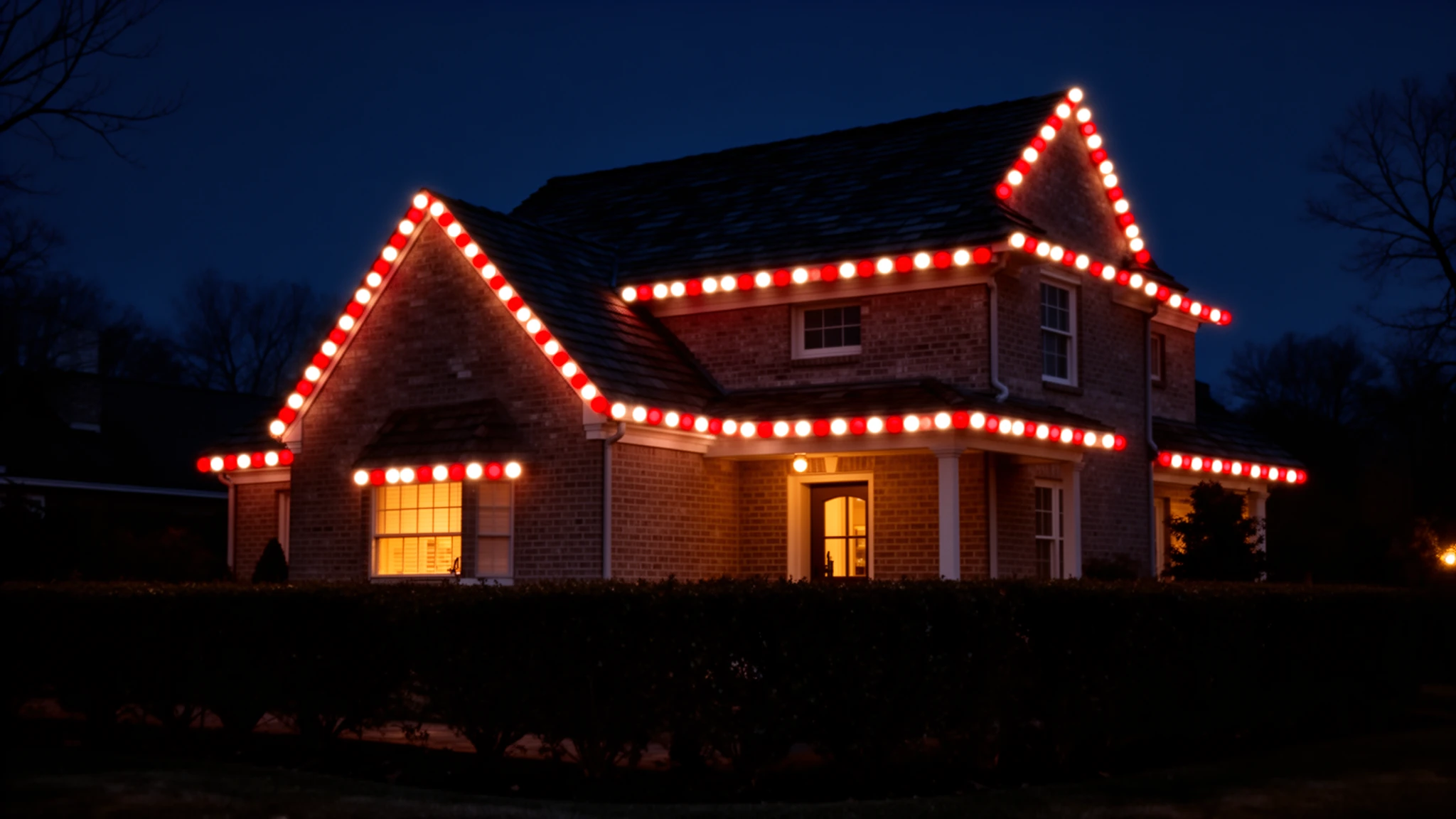
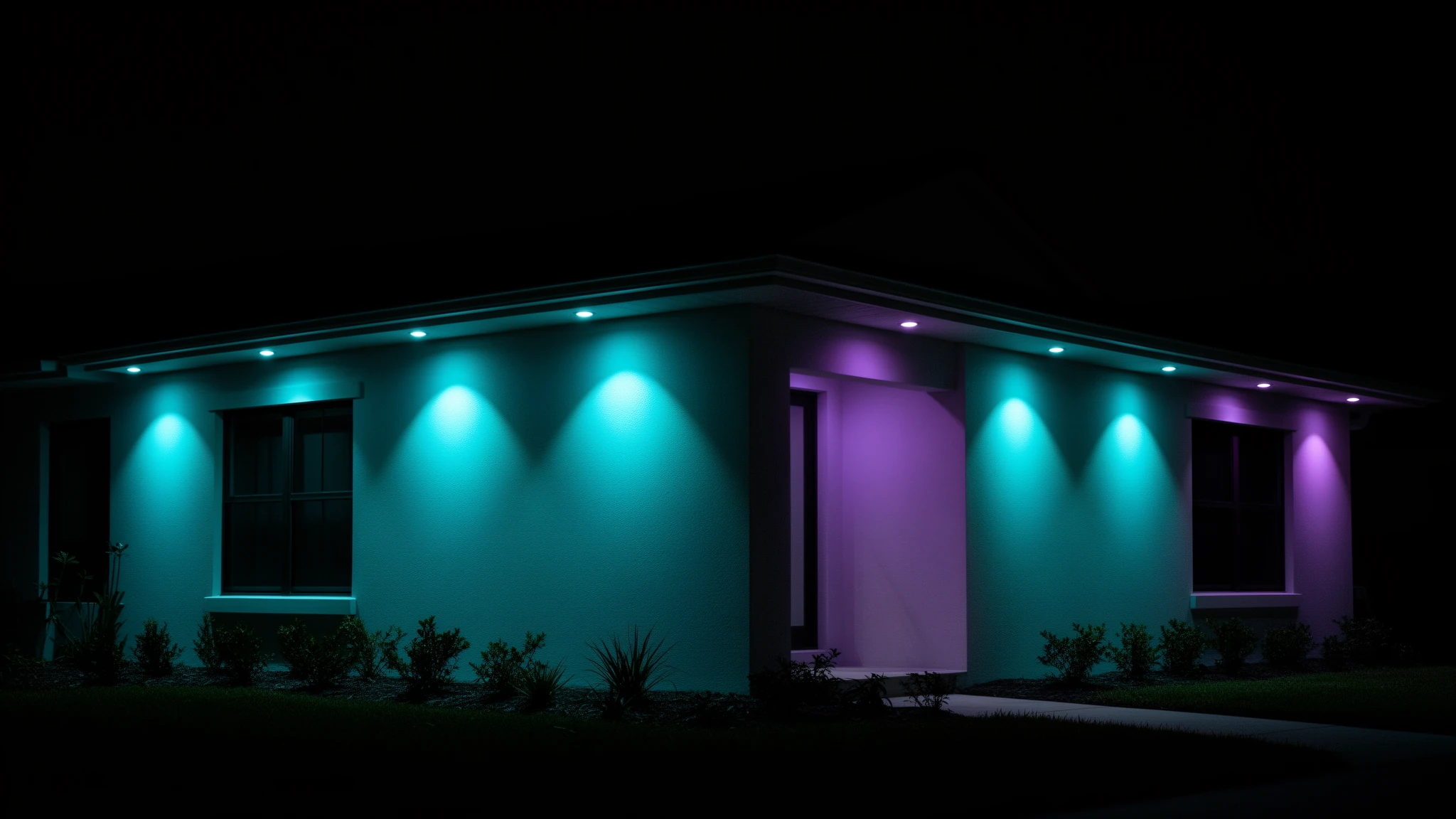
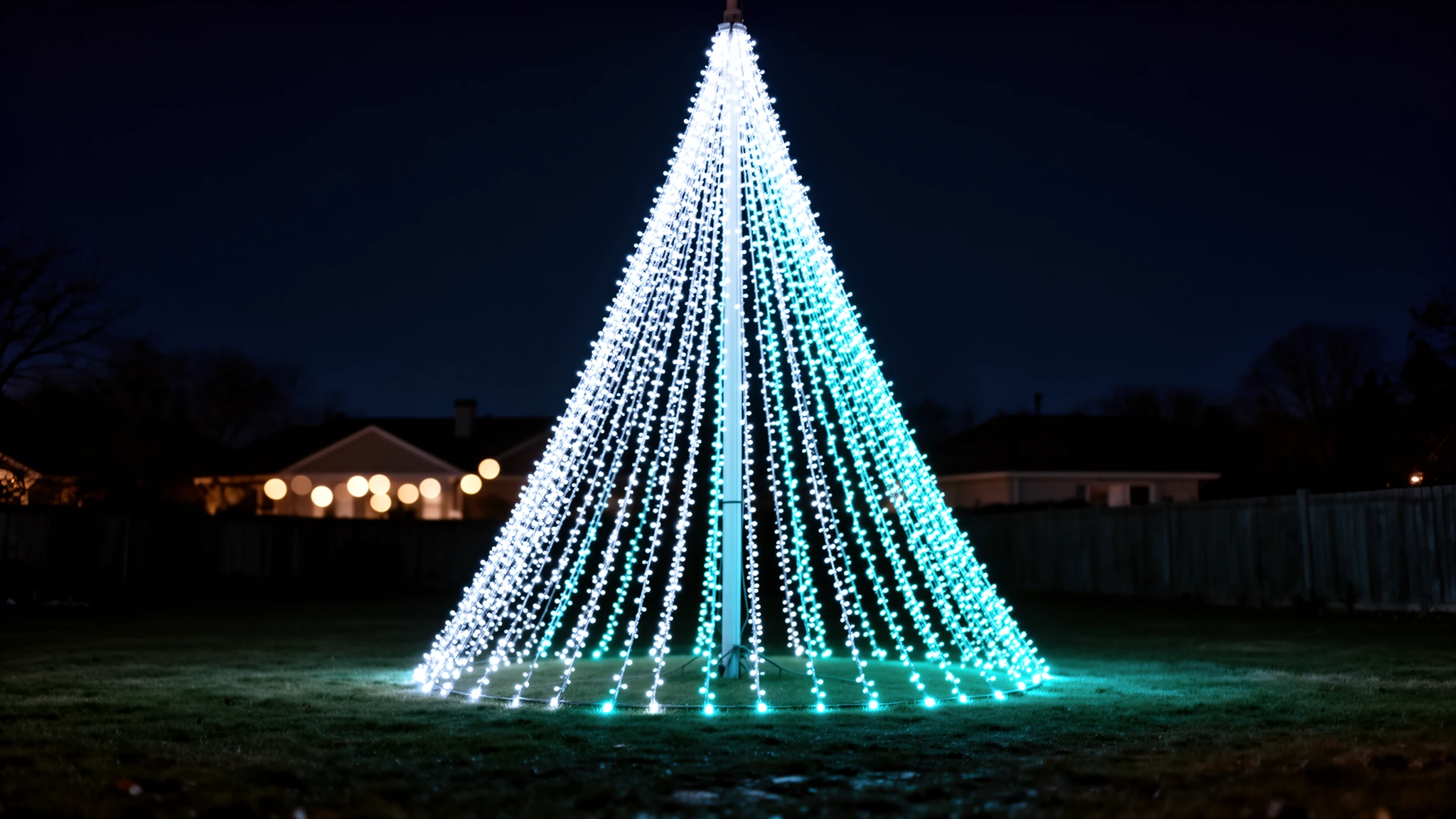
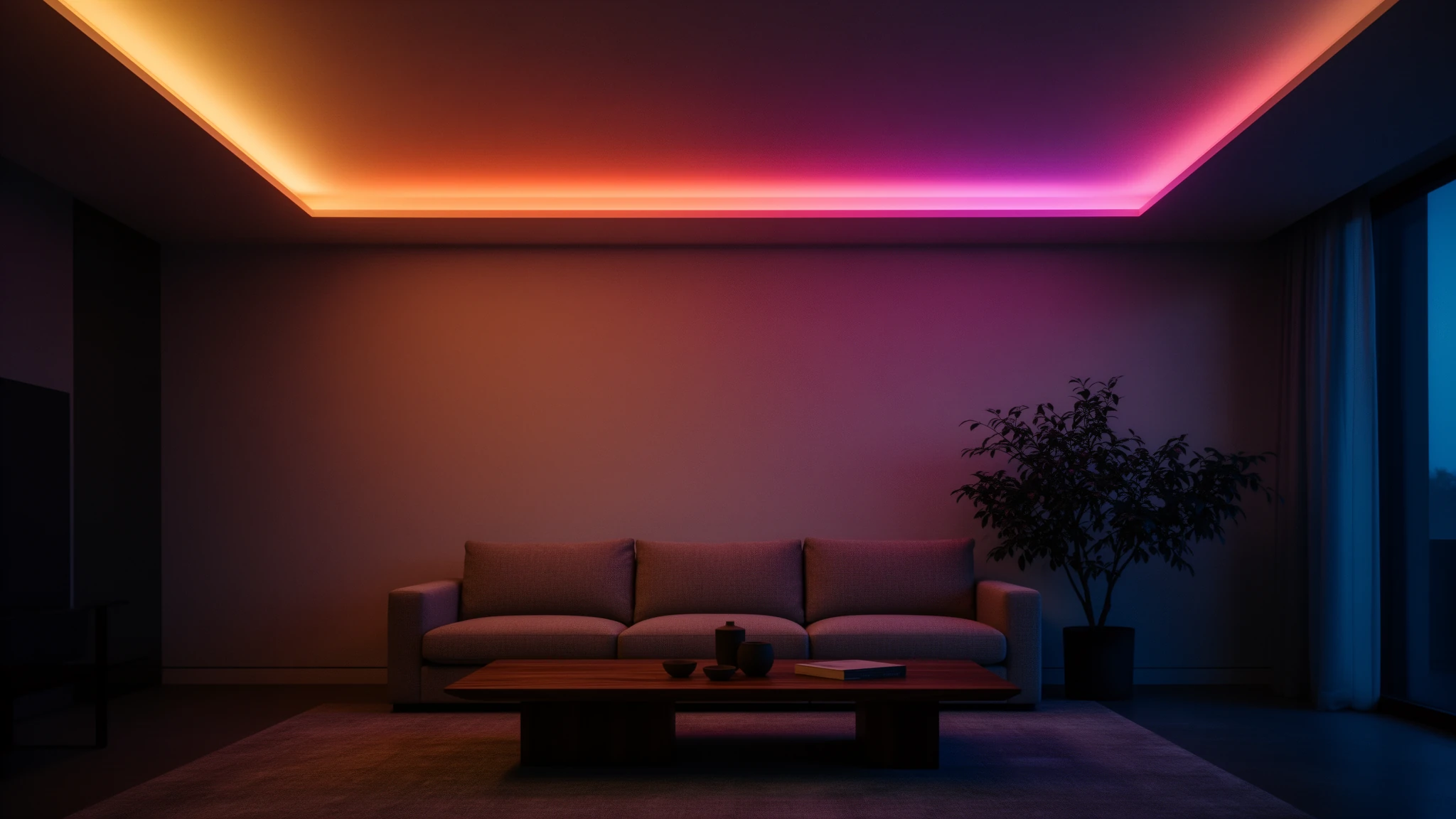
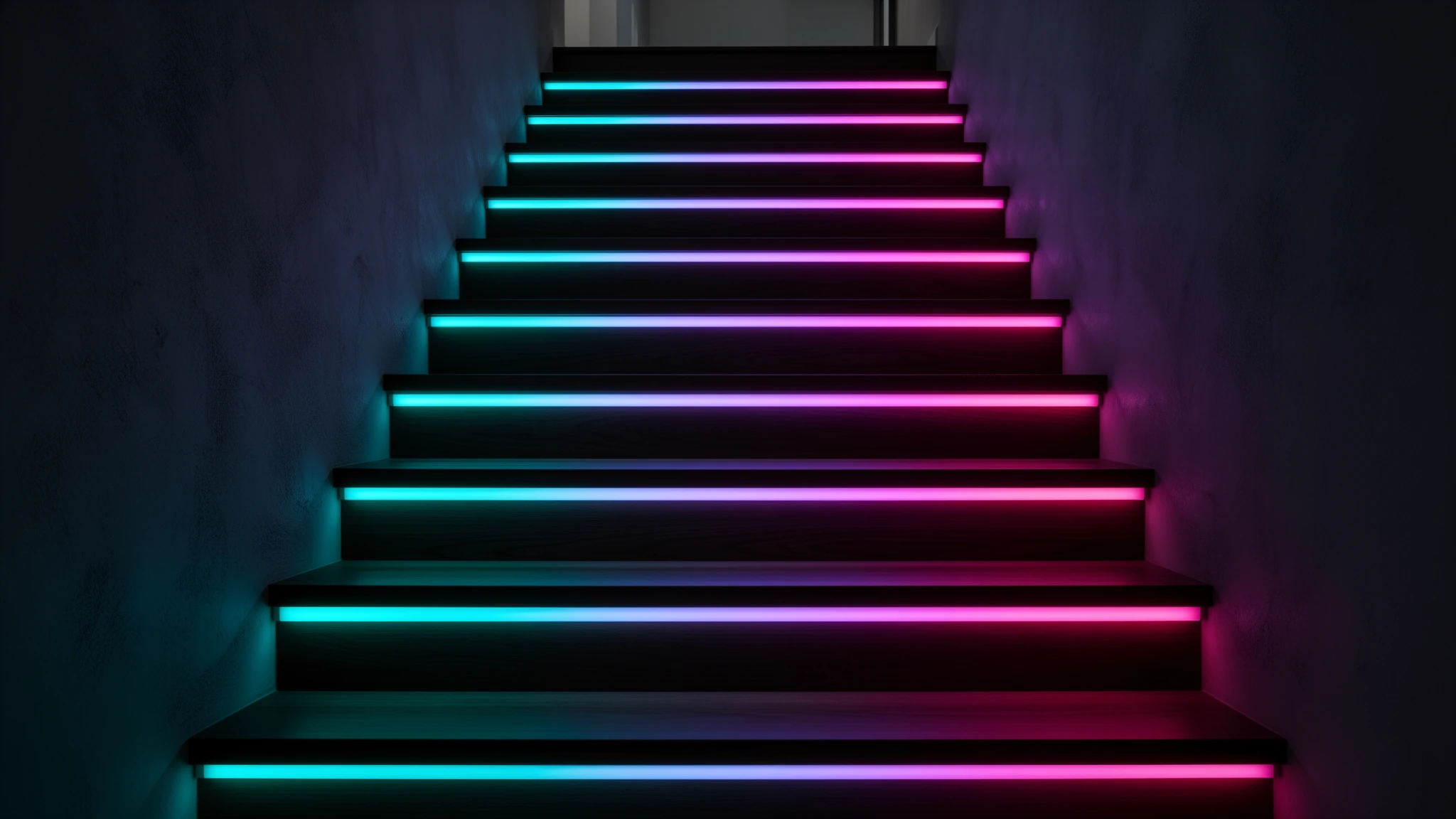
Six classic jobs for an 8-channel stack: bullet-pixel and puck house outlines, a megatree, addressable cove light, a multi-channel sign and COB stairs.

Documented like infrastructure.
The Dig-Octa system has over 49 pages of official documentation on quinled.info: per-board specs, power handling, stacking rules, PSU shortlists and complete example configurations with the power math already done. This site gives you the guided path; the deep reference is one click away.
Designed by Quindor · trusted by 60,000+ subscribers on YouTube and 13,000+ makers on Discord.
Pick a brain. Pick the power.
Build the controller.
One checkout hub: every order starts at quinled.shop, which hands you to the reseller for your region.
Every brainboard arrives with WLED installed and Ethernet enabled. Wire it, power it, open a browser.
Warranty is 6 to 12 months on every board. If something acts up, come to the Discord: we troubleshoot it together, and faulty hardware gets replaced.